
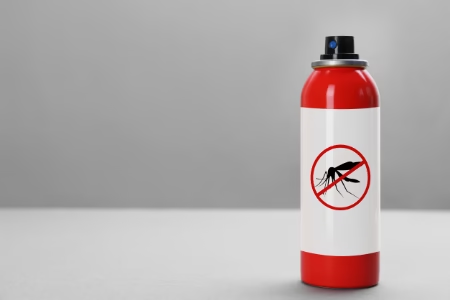
Start with barrier sprays. That’s usually the first recommendation from any technician who’s been on the job long enough. These treatments are applied to shrubs, trees, fences–any surface where flying insects tend to land. The active ingredients stick around for weeks, knocking out adults that make contact. It’s not a one-time thing, though. You’ll need reapplications, especially if there’s rain or heavy plant growth.
Then there are larvicides. These are dropped directly into standing water–birdbaths, puddles, clogged gutters, you name it. They don’t work the same way sprays do. Instead of targeting adult insects, they stop larvae from ever becoming a problem. Some dissolve quickly, others last a month or more. Timing matters. Miss the window, and you’re back to square one.
Misting systems exist too, though fewer technicians recommend them long-term. They’re automated, dispersing a fine spray at regular intervals around a home’s perimeter. Some people love the convenience. Others aren’t thrilled about the ongoing upkeep. It’s a trade-off between automation and control. Not a silver bullet, but one more option on the list.
And sometimes–maybe surprisingly–simple manual reduction methods still come up. Removing standing water, trimming foliage, even changing out outdoor lighting can shift things just enough. No product, just habit changes. Not flashy, but often underestimated.
What Do Pest Control Companies Use for Mosquitoes
Targeting mosquitoes usually starts with identifying their breeding spots. Larvicides are often applied to standing water – birdbaths, clogged gutters, rain barrels – wherever the larvae might thrive. These treatments disrupt development before mosquitoes become airborne. It’s quiet work, but it stops the problem at the root.
For adult mosquitoes already circling around the yard or sneaking into the house, misting or barrier sprays are common. These are typically applied around shrubs, under decks, and in shaded corners. They don’t linger forever, but they reduce activity significantly for a couple of weeks at least. And in some cases, that might be all you need – especially if you're just trying to enjoy summer evenings on the patio.
Some providers also install automated misting systems. Those are a bit of an investment and probably better suited for places with chronic mosquito issues. Still, if you’re aiming for a consistently pest-free home in Calgary, it might be worth considering. Just be aware: these systems do require maintenance and refills, and they’re not a universal fix.
Natural or low-toxicity alternatives are another option, though opinions vary on how well they work long-term. Some people swear by garlic-based sprays or essential oil blends. Others? Not so much. If you’re dealing with light activity, sure, try it. But if you're living near a wetland or backing onto heavy vegetation, chances are those softer methods won’t cut it.
And yes, if you're renting and wondering whether you're stuck handling it alone – you're not. Tenants can absolutely take action. Here's more on that: can I call pest control for my apartment.
Overall, solutions depend a lot on where you live, what kind of yard you have, and how bad the problem is. There’s no one-size approach. Sometimes it’s trial and error. But the goal’s the same: fewer bites, better sleep, and being able to open a window without regretting it five minutes later.
Chemical Treatments Used by Professionals to Kill Adult Mosquitoes
When adult mosquito populations are high, licensed technicians often rely on residual sprays and ultra-low volume (ULV) applications. These methods help knock down active insects quickly, especially in shaded or damp areas where they tend to rest. The goal isn't just to kill what's flying around–but to prevent more from breeding nearby.
For example, a water-based pyrethroid formulation is often applied along the perimeter of yards, shrubs, fences, and under decks. The chemical binds to surfaces and continues working for days–or weeks–depending on weather. It’s not perfect, but in combination with larviciding, it reduces the number of biting adults significantly.
ULV fogging, on the other hand, creates a mist of tiny droplets that float through the air and cling to foliage. It’s quick, covers large areas, and is best timed early morning or near dusk when the insects are most active. Some people assume it works like a bug zapper, but that’s not quite right–it’s more subtle. The fog kills on contact and leaves behind a temporary barrier, though wind and rain reduce its lasting impact.
People sometimes worry about the smell after treatment. Fair question. Some products do leave a faint scent–especially indoors. If that’s something you’ve been wondering, you can check out this quick explanation on how long the smell lasts after treatment.
Different programs use different products, depending on location and mosquito pressure. A licensed technician might combine multiple strategies, adjusting based on property layout, foliage density, or nearby water. And while adulticides handle the immediate threat, they’re rarely used alone. For long-term results, larval habitats need attention too. Here's where broader knowledge of service types comes in handy.
And sure, mosquitoes are a big concern. But often, where there’s one nuisance, others follow. Curious about similar problems like flies in drains or backyard stink bugs? Take a look here: can pest control get rid of drain flies or can pest control get rid of stink bugs. You might be surprised how often they show up together.
If you're near Airdrie or just outside Calgary, you can always talk to insect and rodent experts in Airdrie who know the local challenges. They’ve probably seen your exact situation–or something close to it. And while mosquitoes tend to grab the spotlight, don’t forget: skunks, ants, and even raccoons might need attention too. Here’s something on that: does pest control get rid of skunks.
It’s all part of managing a property properly. Not just reacting to flying bugs, but planning ahead. If you’re still piecing together how this all fits, there’s a useful breakdown here: what is pest control. Might help clear things up.
How Larvicides Are Applied to Disrupt Mosquito Breeding Cycles
The fastest way to break the mosquito life cycle? Target them before they hatch. Larvicides, often in the form of granules, briquettes, or liquids, are introduced directly into stagnant water–anywhere larvae are found or likely to develop. Think rain barrels, catch basins, clogged gutters, birdbaths, even low spots on lawns after a storm. Basically, if it holds water for more than a few days, it could become a nursery.
Technicians assess each site individually. There’s no one-size-fits-all here. Some areas need a slow-release treatment that stays active for weeks. Others benefit from a fast-acting product, especially after heavy rain. Sometimes both get used together. It depends on the environment, temperature, and how much organic matter is in the water. Organic sludge tends to reduce product performance, so those areas need extra care–or alternate strategies altogether.
Products typically contain *Bacillus thuringiensis israelensis* (Bti) or *methoprene*. Bti targets larvae without harming pets, birds, or beneficial insects. Methoprene disrupts development by mimicking hormones, stopping larvae from reaching adulthood. Some clients ask which is “better,” but honestly, it's more about matching the method to the conditions. If there’s movement in the water, or fish, or shade all day long–each of those factors shifts the choice slightly.
One key step that’s often overlooked: rechecking. After treatment, follow-ups matter. Not everything hatches on the same day. And if new water collects nearby? That’s another breeding site waiting to happen. That’s why ongoing programs–like those offered by The Pest Control Guy–are designed around seasonal shifts and site-specific patterns, not just a single visit.
Some people expect instant results, but larviciding isn’t about wiping out adult swarms overnight. It’s prevention. Quiet, boring, behind-the-scenes prevention that, when done right, means fewer bites next week and a lot less buzzing next month. Kind of invisible... until it isn't.
Types of Equipment Professionals Rely On During Mosquito Spraying
Backpack foggers are probably the most common tool in the mix. They're portable, easy to navigate around shrubs, and can deliver a consistent mist over dense vegetation. That said, they’re not always the right fit–especially for larger properties or areas where access is limited.
For wide-open lawns, truck-mounted ULV (Ultra-Low Volume) sprayers tend to be the go-to. These machines can distribute adulticides over a broad area in a relatively short time, and they’re often used in neighbourhood-wide applications. Some models can even be adjusted based on droplet size, which helps manage drift and improves coverage depending on weather conditions.
There's also handheld gear–manual pump sprayers or battery-powered units. Not high-tech, but surprisingly useful in smaller zones, like around patios or garden beds. Pros often carry one along as backup or to hit tricky spots where foggers miss. Some setups even combine larvicide and adulticide treatments in a single run, though that depends on the site and timing.
Interestingly, thermal foggers still see some use–particularly in humid spots or around stagnant water. The fog they create is dense and can linger, making it ideal where visibility and penetration matter. Not the quietest option, but very effective if applied correctly.
Of course, choosing the right gear isn’t just about coverage. It’s also about discretion, safety, and how visible the application will be to neighbours. In that way, it’s similar to how discreet vole pest control is handled–less fuss, more results.
Q&A:
Do professionals spray only adult mosquitoes, or do they also treat the larvae?
Professionals usually address both life stages. They apply larvicides to standing water, such as ponds, drains, and catch basins, where mosquitoes lay eggs. These products interrupt the development process before the insects can mature. Adult mosquitoes are then targeted using foggers or misting systems around shaded or damp areas where they rest during the day.
What kind of equipment is used for outdoor mosquito spraying?
Specialists often rely on backpack mist blowers or truck-mounted ULV (ultra-low volume) foggers. These machines disperse fine droplets of insecticide across large areas, focusing on shrubs, tall grass, and tree canopies—common resting spots for adult mosquitoes. The choice depends on the size of the property and the surrounding landscape.
Are the mosquito treatments safe around pets and children?
Most of the products used are approved for residential use and are applied in a way that limits exposure to people and animals. However, it's usually recommended that pets and children stay indoors during the application and for a short time afterward—typically 30 minutes to an hour—until the product has dried.
How often should mosquito treatments be repeated?
The frequency depends on the severity of the mosquito activity and local conditions. In many cases, treatments are repeated every 21 to 30 days during the peak season. Rain, high temperatures, and the presence of water sources can influence how often a reapplication is needed.
Do professionals use natural or organic options to control mosquitoes?
Yes, many providers offer plant-based alternatives. These may include sprays with ingredients like cedar oil, lemongrass, or garlic. While they tend to break down more quickly and may require more frequent application, they are often requested by clients seeking a low-toxicity solution.